EMPLOYEE MANAGEMENT SYSTEM
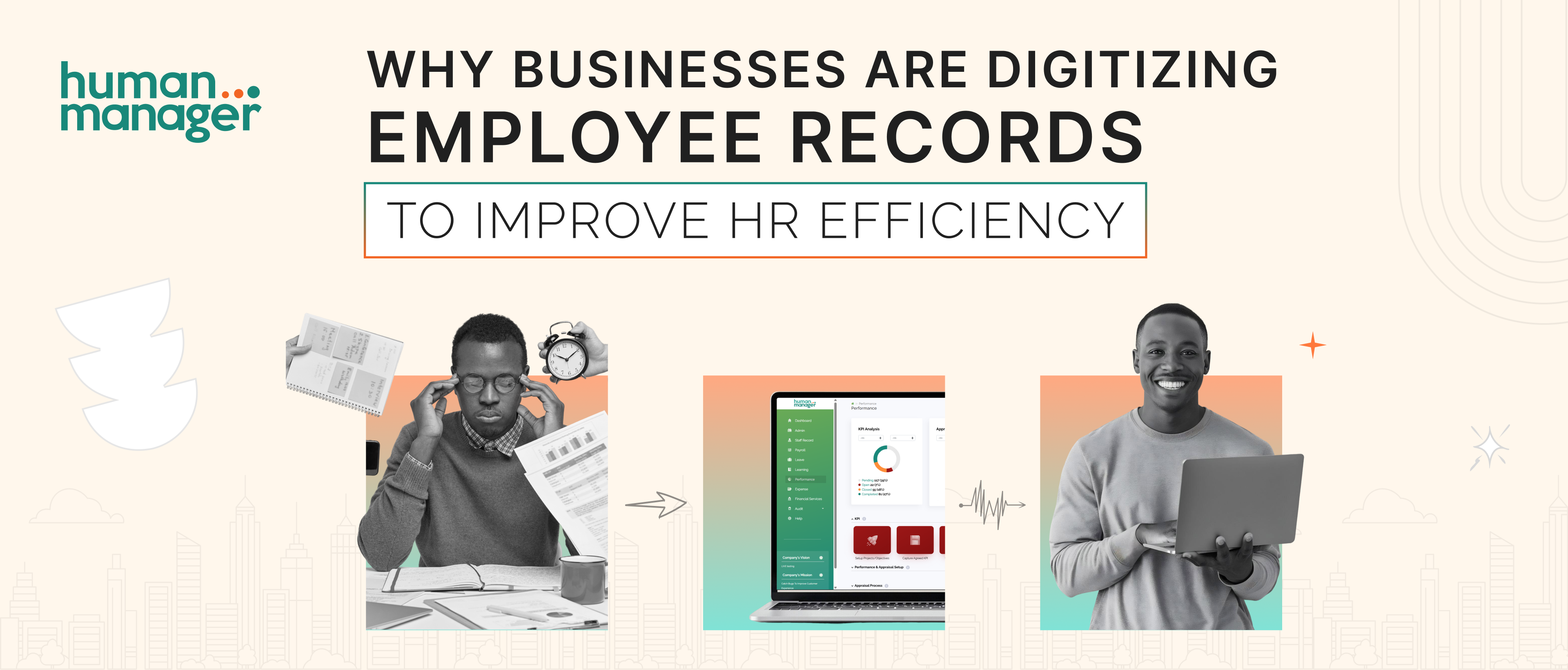
At 8:45 a.m., an HR manager receives an urgent request from leadership.
A workforce report is needed before a strategy meeting starts in 15 minutes. But the information sits across spreadsheets, emails, shared folders, and paper files. By the time the records are gathered and verified, the meeting is already underway.
For many organizations, this situation is more common than they realize. It's the reality of managing employee information without a connected system.
As businesses grow, fragmented records begin creating delays, slowing decision-making, affecting compliance, and increasing administrative pressure on HR teams. What once felt manageable quickly becomes difficult to sustain.
That's why more organizations are investing in employee records digitization and HR automation to build faster, smarter, and more efficient HR operations.
Modern businesses are no longer digitizing employee records simply to reduce paperwork. They're doing it to improve workforce visibility, simplify processes, strengthen compliance, and create systems that support long-term business growth.
What Is Employee Records Digitization?
Employee records digitization is the process of storing and managing employee information within a centralized digital system instead of disconnected spreadsheets, emails, or physical files.
Using modern HR software for businesses, organizations can securely manage:
- Employee personal information
- Contracts and employment history
- Leave and attendance records
- Payroll-related documentation
- Performance tracking data
Instead of switching between multiple tools, HR teams can access workforce information in real time through one connected platform.
This improves both efficiency and accuracy across HR operations.
Why Businesses Are Prioritizing HR Digitization
Faster Access to Workforce Information
When employee records are centralized, HR teams spend less time searching for information and more time responding to business needs.
Simple tasks like retrieving documents, approving leave requests, or preparing workforce reports become significantly easier when information is organized within one smart system.
Improved HR Efficiency Through Automation
A large percentage of HR workload still comes from repetitive administrative processes.
By combining employee records digitization with HR automation, businesses reduce manual follow-ups, duplicate entries, and unnecessary delays.
This creates smoother workflows across teams while helping HR focus on higher-value responsibilities like employee development, workforce planning, and performance management.
Stronger Compliance and Data Security
Digital HR tools help businesses improve documentation, maintain accurate employee records, and reduce compliance risks linked to missing or outdated information.
More importantly, leaders gain greater visibility into workforce operations and employee data.
That level of visibility creates stronger operational confidence across the business.
How Digitized HR Systems Support Business Growth
Digitizing employee records is not just an operational upgrade. It directly impacts how efficiently a business runs.
Organizations with connected HR systems are often better positioned to:
- Make faster workforce decisions
- Improve employee experience
- Track workforce performance more effectively
- Respond quickly to operational changes
- Scale with fewer administrative bottlenecks
This is where HR evolves beyond administration.
With the right systems in place, HR becomes a strategic function that supports workforce efficiency, productivity, and sustainable growth through people.
What to Look for in an HR Technology Management System
Not all systems are designed to support growing organizations.
A modern HR management system should:
- Centralize employee records
- Support leave management automation
- Include performance tracking capabilities
- Automate repetitive HR processes
- Provide real-time reporting and workforce insights
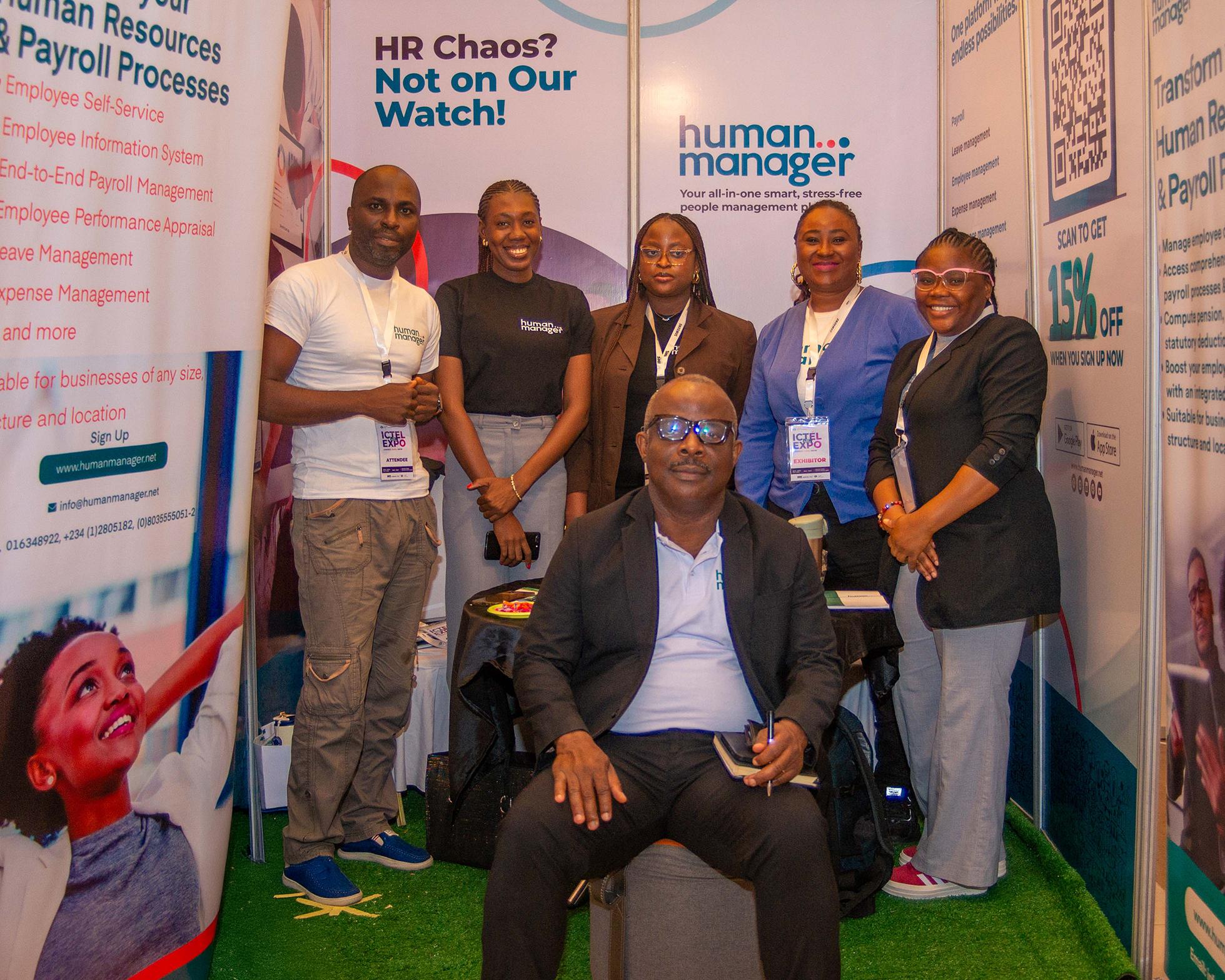
HumanManager helps organizations bring these processes together within one connected platform.
By simplifying employee management and improving operational visibility, businesses can work more efficiently while creating better experiences for both employees and HR teams.
Disconnected employee records slow businesses down more than many organizations realize.
As HR operations become more complex, businesses need smarter systems that improve visibility, reduce manual work, and support better workforce decisions.
Employee records digitization gives organizations the structure needed to operate with greater efficiency, accuracy, and confidence.
And increasingly, businesses that invest in connected HR systems are positioning themselves for stronger, more sustainable growth.
To subscribe to Employee Management System, click here
HumanManager is a part of SystemSpecs Holdings Limited