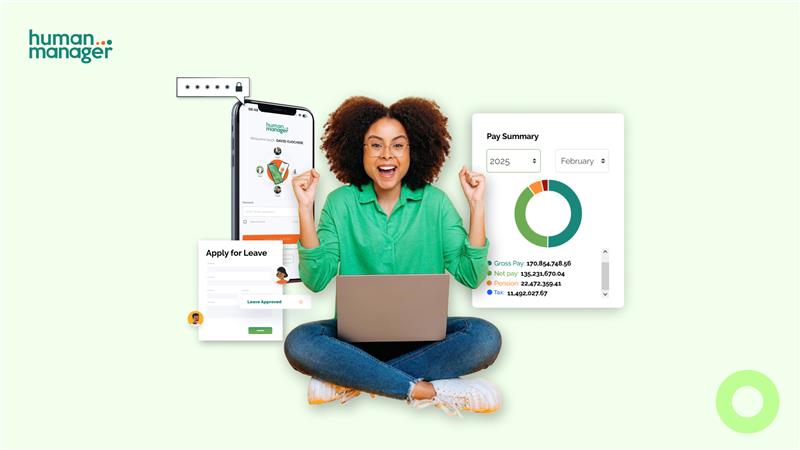
Nigeria's workforce management landscape is evolving rapidly as organizations increasingly adopt digital tools to manage people, payroll and performance.
Businesses searching for HR software in Nigeria are increasingly looking for solutions that combine payroll automation, employee management and compliance into one seamless system.
From startups to large enterprises, HR software is helping organizations automate processes, improve compliance and gain better workforce insights.
In this guide, we highlight some of the top HR software platforms in Nigeria helping businesses streamline their HR operations.
Top HR Software Platforms in Nigeria
1. HumanManager
HumanManager is an enterprise-grade HR and payroll management software in Nigeria, developed by Systemspecs, designed to help organizations manage their workforce with confidence and operational clarity. The platform offers capabilities across payroll automation, employee lifecycle management, leave administration and workforce insights.
HumanManager is particularly valued by organizations looking for a reliable HR system that delivers operational confidence and peace of mind in workforce management.
2. SeamlessHR
SeamlessHR is one of the well-known HR technology platforms in Nigeria, offering solutions for payroll, employee management, performance management and HR analytics.
The platform is widely used by mid-sized and large organizations seeking to automate HR processes and improve operational efficiency.
3. PaidHR
PaidHR focuses on simplifying payroll and HR management for businesses, particularly small and medium-sized enterprises.
The platform helps organizations automate payroll processes, manage employee records and ensure compliance with local regulations.
4. Zoho People
Zoho People is a global HR management platform offering employee database management, performance tracking and HR automation features.
It is popular among companies already using other Zoho business applications.
5. BambooHR
BambooHR is an internationally recognized HR software platform used by organizations to manage employee data, recruitment processes and HR analytics.
How to Choose the Right HR Software in Nigeria
When selecting the right HR software, Nigerian businesses should consider the following:
Payroll capabilities: Ability to manage payroll accurately and ensure compliance with local regulations
Scalability: Flexibility to grow with the organization
Ease of use: User-friendly interface for HR teams and employees
Integration: Compatibility with existing business systems
Compliance: Alignment with Nigerian labor laws and tax requirements
Choosing the right platform ensures not only efficiency but also long-term operational stability.
Why HR Software is Critical for Nigerian Businesses
As organizations grow, manual HR processes become inefficient and prone to errors.
Modern HR software helps businesses:
Automate payroll and HR processes
Improve employee experience
Ensure regulatory compliance
Gain insights into workforce performance
This is why more organizations are investing in HR automation software in Nigeria to stay competitive.
As Nigerian businesses continue to adopt digital solutions to improve efficiency and workforce management, HR software platforms will play an increasingly critical role in shaping the future of work.
Organizations evaluating HR software should consider factors such as scalability, payroll capabilities, compliance and integration.
Platforms like HumanManager, SeamlessHR and PaidHR are helping Nigerian businesses modernize HR operations and build more efficient workplaces.
Our Managing Director, Udo Ngele, is one of the tech leaders putting Nigeria on the global map. Sitting at the helm of HumanManager Limited, a flagship of Africa's foremost software powerhouse, SystemSpecs Group, Ngele has quietly shaped some of the nation's biggest digital milestones beyond electronic human resource management.
A pioneer in HR automation, his career reflects a rare blend of innovation and versatility, with his fingerprints spread across landmark initiatives like the Treasury Single Account, Integrated Payroll and Personnel Information System, and the celebrated "ghost worker-catching" solution that saved the country a fortune while driving accountability in governance.
This interview chronicles his inspiring trajectory as a Lagos Business School alumnus, who rose from a junior developer at SystemSpecs to now calling the shots at the top. His Midas touch is in transforming digital HR from a basic payroll tool into a fully cloud-enabled and enterprise-grade solution built for the realities of modern work, as well as his candid views on how technology is redefining HR's role and the future of work…
How did your interest in technology begin, and what was the learning environment like in your early years?
My technology journey began with a love for mathematics. As a child, I imagined a future in that field, but as computer science started gaining prominence, I saw a natural bridge between the two. A good mathematician, after all, often makes a good programmer. That realisation sparked my interest in computing and software development.
Technology then was not what it is today. The programming languages we used to write programs were FORTRAN and Pascal. Fortunately, my school, Federal University of Technology, Minna, had one of the best IT laboratories of its time. The resources were few relative to the number of students, but the exposure was a good enough foundation.
With all the improvements we have today, the basics remain the same. Programming is still all about logic: being able to write good algorithms, structure applications in tiers, and ensure the end product actually meets requirements.
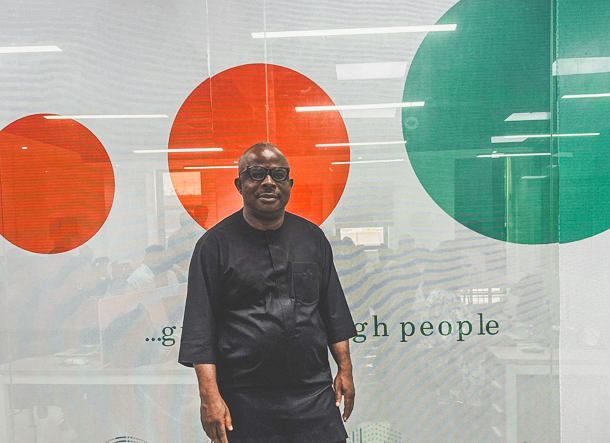
HumanManager MD, Mr Udo Ngele, and team members at the ICTEL – LCCI 2025 event in Lagos
How have the lessons from your early training continued to influence how you learn, lead, and innovate in today's tech-driven world?
Growth is about moving from what was relevant yesterday to what matters today. Over time, I've pursued continuous training, many of which were supported by our parent company, SystemSpecs, to stay ahead of evolving trends. The same applies to organisations.
I remember when we first transitioned from client-server applications to web-based platforms. Initially, I questioned the move, asking, "Why put such critical systems on the web?" But as the world changed, it became clear that what once seemed unnecessary quickly became indispensable.
This is a reminder that both individuals and organisations must keep learning and adapting, because what appears less valuable today may turn out to be vital tomorrow.
Is that to say that HumanManager emerged as a response to evolving workplace dynamics?
Back then, there was no internet, and most organisations operated on closed networks. Many questioned why HR applications should even be online. But we recognised the gap and became one of Africa's earliest HR automation pioneers.
As the workplace evolved with globalisation, migration, and new work realities, we kept adapting. HumanManager 3.0 handled payroll, tax computation, and basic HR. In versions 4.0 through 4.3, we introduced biometrics and powered the Federal Government's IPPIS nationwide payroll system.
In 2007, version 5.0 marked our first bold step into the cloud, setting the stage for today's HumanManager 7.0, a fully cloud-enabled, enterprise-grade platform. This latest version reflects lifestyle changes and modern work, with tools for learning, performance tracking, résumé management, and remote work management.
Your application automates HR processes from employee entry to exit. What roles remain for HR personnel within organisations?
Automation doesn't eliminate HR roles; it simply redefines them. Just as with AI, machines can take on repetitive and even cognitive tasks more efficiently, but they cannot replace human judgment, strategy, empathy, or culture-building.
Yes, some roles may shrink, but the human element remains central in areas like strategy, leadership, and people management. Businesses today cannot afford to resist digitisation; the environment is too fast-moving and resources too scarce. The challenge is to prepare our workforce to adapt so that disruption becomes opportunity, especially in a growing and dynamic economy like ours.
Technology is redefining HR roles. What new responsibilities has this shift placed on HR professionals?
Evolving technology is shifting HR's focus from monitoring staff's presence to measuring performance. In the past, being physically in the office was the metric; today, it's about KPIs and deliverables. Remote work has added another layer, with digital tools now used to track productivity.
However, this is also raising questions about how to define "productive." HR leaders must adapt by blending technology with human judgment, building smarter processes, and guiding organisations through new workplace dynamics.
Innovation, they say, is continuous, driven by necessity. What often inspires the company's next move?
Three drivers are shaping our approach. The first is technology itself. It's no longer just about functionality; people now demand systems that are intuitive and visually engaging. The second is the shift in workplace dynamics, with branch networks, centralised IT, and remote approvals becoming the norm.
Basically, we are driven by our day-to-day challenges. For instance, enabling managers to approve leave or documents remotely came from a real situation within our company. If we were facing those challenges, we knew others were too. The third is client and societal expectations. Concerns about online security have given way to trust in robust controls, while cost pressures and the need for agility have pushed organisations to the cloud. COVID-19 further accelerated remote and hybrid work models.
For us, this means building platforms that are scalable, secure, and simple to use, with features that extend beyond payroll into the wider HR ecosystem. That includes recruitment, onboarding, performance management, expense claims, and even alumni networks to keep former employees connected. We also love to stay ahead by tracking global trends, which is why we are regular attendees of top industry events like the GITEX conference to leverage the latest tech and insights.
Which sectors of the economy have mostly benefited from your solutions?
Over the years, we've served clients across sectors, including manufacturing, banking, oil and gas, non-profits, and government. Today, however, our focus is on SMEs.
We've made our solutions affordable and easy to onboard, so even a five-person business can access payroll and HR tools without heavy infrastructure costs. While we still serve large organisations, SMEs are the biggest beneficiaries, and we believe they represent the future.
AI is the in-thing. How is this being integrated into human resource management?
For us, we've already embedded AI across several of our offerings. Our customer support chatbots now resolve customer queries instantly, while our recruitment assistant can generate job descriptions from simple prompts.
So, instead of manually drafting job descriptions, users can provide basic inputs, and the system generates a complete requirement. We're also exploring AI-driven workforce monitoring and analytics to give HR leaders deeper insights into employee performance, behaviour, and future trends. Overall, the goal is smarter, predictive, fully digital HR processes that are accessible anytime, anywhere.
The future of work is remote, with technology, especially AI, taking over tasks. My advice to young people is to move beyond routine work and build skills that leverage creativity, strategy, and innovation.
Also, the AI ecosystem is evolving at an incredible pace, shifting from knowledge-based use cases to more agentic and autonomous applications. Organisations are increasingly adopting these technologies to streamline operations, optimise costs, and enhance productivity, fundamentally redefining how people and systems work together.
AI has come to stay; it is not a passing trend but the future of work itself. As it continues to mature, we are not just observing this shift; we are actively shaping it. By embedding AI and digital innovation into our solutions.
What do you consider the most pressing HR challenge in Nigeria, and what opportunities does it present?
I would say the biggest challenge is the quality of human resources. We have the numbers but not always the skills, from basic communication to technical competence and critical thinking. Employers often interview dozens of candidates to find one or two suitable ones.
The "Japa" wave has also worsened the problem, draining experienced talent not just in healthcare but in technology too. Thankfully, regulatory bodies are helping to bridge this skills gap by enforcing standards like ISO, BCMS, and NDPR certifications to help enforce better processes in industries.
Otherwise, the outcome would have been disastrous. The opportunity here highlights the need for stronger succession planning. HR must deliberately build systems that prioritise continuous learning and knowledge transfer, so organisations are not left vulnerable when people leave.
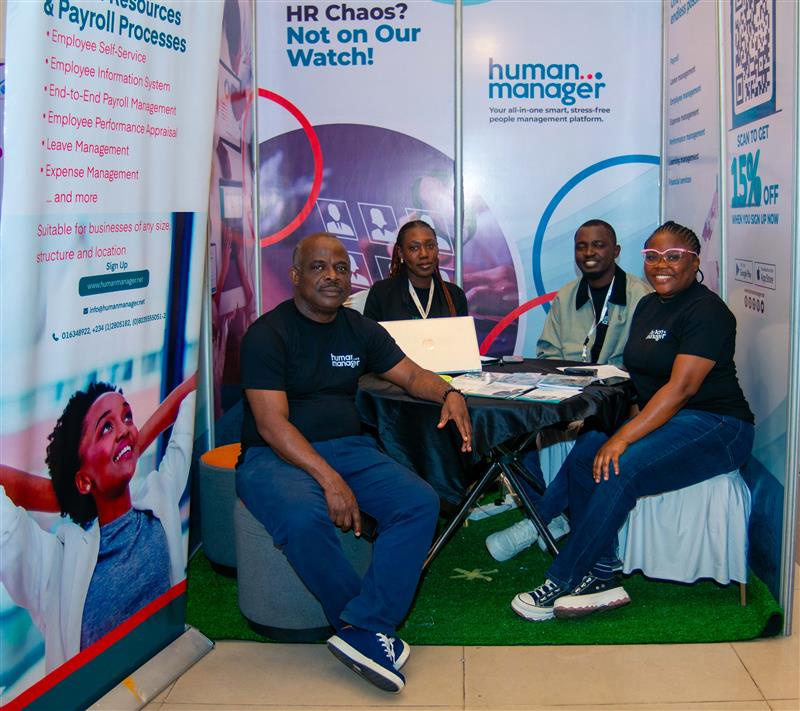
HumanManager MD, Mr Udo Ngele (Middle), and team members during the 2025 Customer Service Week
As a leader in the technology space, how is 'Japa' affecting you personally, and how do you navigate around it?
Staff retention has become increasingly challenging, as many skilled professionals now take up remote roles abroad. It's a reality that requires leaders to rethink engagement and flexibility.
Organisations often invest heavily in developing talent, only to lose key people just as they become valuable contributors.The cycle can indeed be frustrating, as it often creates uncertainty in managing teams. To adapt, I've had to be flexible: building stronger relationships, supporting hybrid work, cross-training teams, and even keeping some relocated staff engaged on contract.
For me, the key is not to see Japa as a total loss, but to adapt by treating talent as long-term partners rather than just employees, ensuring that value and connection are sustained regardless of location.
If you could change one thing about how African businesses approach HR, what would it be?'
I would encourage them to place greater value on human capital and make smarter use of the data they already have. For too long, businesses have underestimated the value of human capital and HR data. We gather information but rarely analyse it to guide strategy.
Take the healthcare sector as an example, when leaders dismissed the loss of doctors, we failed to read the warning signs in the data, and today the system is struggling. If African businesses truly leveraged data, they could better understand their workforce, anticipate challenges, and make smarter, forward-looking decisions that strengthen both people and organisations.
You began your journey at SystemSpecs as a junior developer and have risen to become Managing Director–a remarkable trajectory, especially in an era where many advance their careers by moving between organisations. Looking back 24 years, did you ever imagine yourself occupying this seat today?
When I joined SystemSpecs in 2001, I expressed my belief that I could contribute meaningfully to its future. I had no idea how true that would become. Looking back now, I am grateful to be part of its journey and transformation. I joined as a junior developer at the time, never intending to stay longer than five years. But each new challenge kept me engaged.
At first, it was working on the Integrated Payroll and Personnel Information System, also known as the IPPIS project, Nigeria's centralised digital platform for managing public-sector staff records and payroll. It became one of the country's most ambitious HR modernisation efforts. From there, I moved into payments with Remita on the Treasury Single Account, and later into cybersecurity as the Chief Information Security Officer. Every phase opened doors to projects that were too compelling to walk away from.
HumanManager has evolved through different eras of technology and workplace trends. From your perspective as someone who has been part of its journey from the start, what key contributions or innovations have shaped its growth and enduring relevance?
HumanManager has remained relevant across multiple generations of technology — a testament to the team's commitment to innovation and adaptability. A major turning point was our early embrace of self-service HR, long before it became mainstream.
The idea stemmed from our Group Chairman's belief in simplicity and empowerment — why should HR apply for your leave when you can initiate it yourself? That shift not only streamlined processes but also redefined how organisations engaged their workforce.
Another innovation I'm proud of is what we called the 'Ghost Catcher' – a system that combined biometrics with behavioural algorithms to detect ghost workers and eliminate duplicate or fake records. At the time, organisations paid us directly from validated savings on wage bills, and this solution once saved about ₦40 million every month.
Celebrated Global technologist Jensen Huang once said he works seven days a week, and that when he's not working, he is thinking about working. Does that apply to you, too?
Earlier in my career, I was deeply immersed in work — even during personal time. Over the years, I've learned to balance productivity with rest.
Today's KPI-driven work culture makes it possible to blend family and work, like doing school runs while still meeting deadlines. I'm now more conscious about rest, though I still find myself drawn to solving problems. When I do switch off, I enjoy detective movies.
What strategic value should Nigerians expect to see from your continued expertise and leadership in this sector?
Going forward, our focus is on making work simpler, smarter, and more connected. For example, we're building tools that allow organisations to monitor performance and use data to predict trends, so HR decisions are based on facts, not guesswork.
Our goal at HumanManager is to digitise HR end-to-end and position it as a strategic driver of growth. That means stronger platforms, visitor management, alumni engagement, embedded financial services like loans and insurance, and deeper integrations. The future of work is digital, and every forward-thinking organisation must digitise.
Performance reviews are foundational for effective employee feedback; however, the critical question remains: “Are performance reviews enough to ignite employee productivity and transformational growth?”
While reviews offer valuable insights into strengths and weaknesses, they can leave employees uncertain without a clear path forward. Simply understanding areas for improvement is not enough. The key lies in translating this feedback into actionable steps, going beyond the review itself, and fostering a culture of continuous engagement.
Here is how to ensure your performance review process becomes a catalyst for positive change:
1. Foster Open Dialogue
Following a performance review, an open dialogue is vital – whether praising a stellar performance, addressing poor performance, or discussing termination. This allows both managers and employees to align their perspectives on performance, fostering mutual understanding and setting the stage for future actions. Confronting any issue head-on promotes a healthier work environment and prevents prolonged dissatisfaction.
2. Recognise & Reward Great Work
Employee recognition is not just about a pat on the back – it is a strategic investment in your organisation's future. Recognise and celebrate performing employees to motivate them and instill a sense of satisfaction and responsibility. Positive feedback is a powerful motivator, reinforcing the value of their contributions.
3. Set Smart Goals
Goal setting within the performance review process transcends simply listing aspirations and aligning them with KPI's. It is a strategic exercise that bridges past performance with future aspirations, fostering a sense of direction and purpose.
Through collaborative goal setting, employees and managers work together to define SMART goals that are directly aligned with the broader organizational objectives, providing a clear roadmap to success.
Start preparing for the next appraisal immediately. Keep a running list of achievements throughout the year, documenting successes as they occur with a robust performance management system or HRMS. This ensures that notable accomplishments are not overlooked, giving a comprehensive view of an employee’s contributions.
"Positive feedback is a powerful motivator, reinforcing the value of their contributions"
Effective communication between employees and supervisors during the review process is crucial. Transparency and honesty are key to success and productivity. By fostering an environment of open dialogue and continuous feedback, you will drive meaningful change and empower your employees.
Explore our demo
Ready to transform your organization's performance management process? Request a demo and take the first step towards empowering your employees.
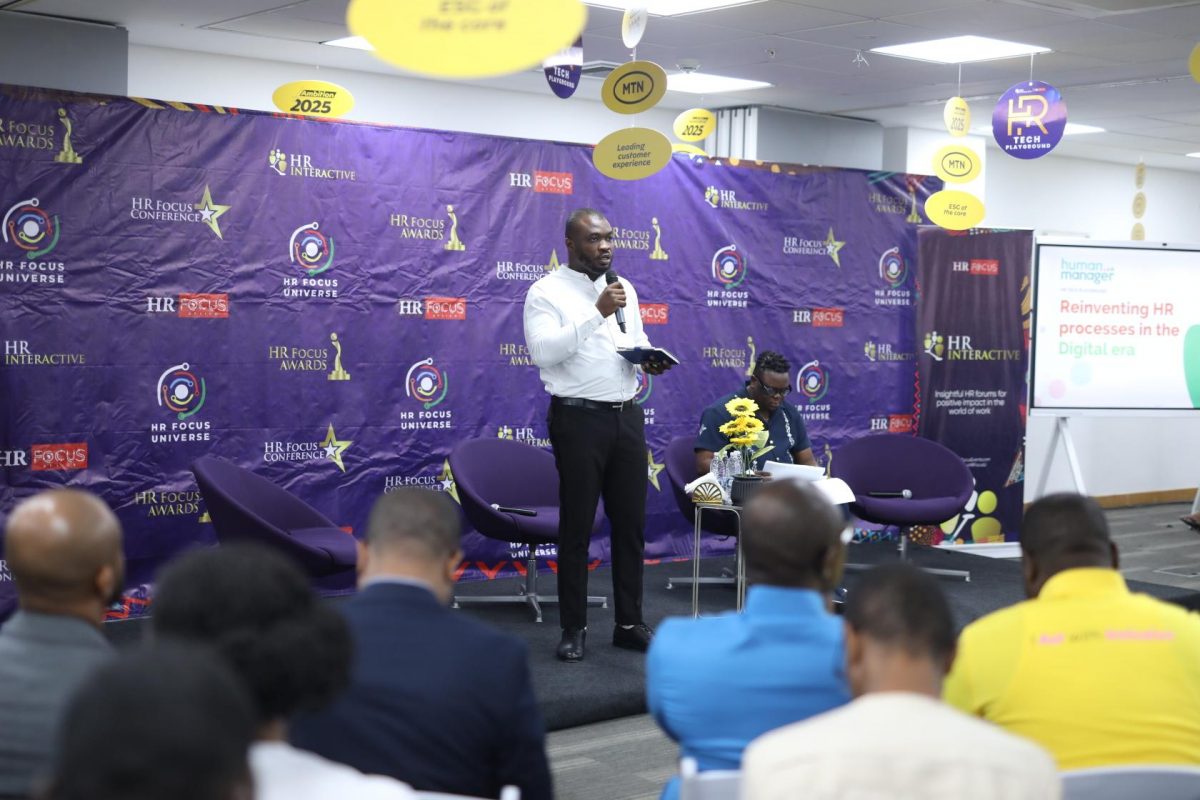
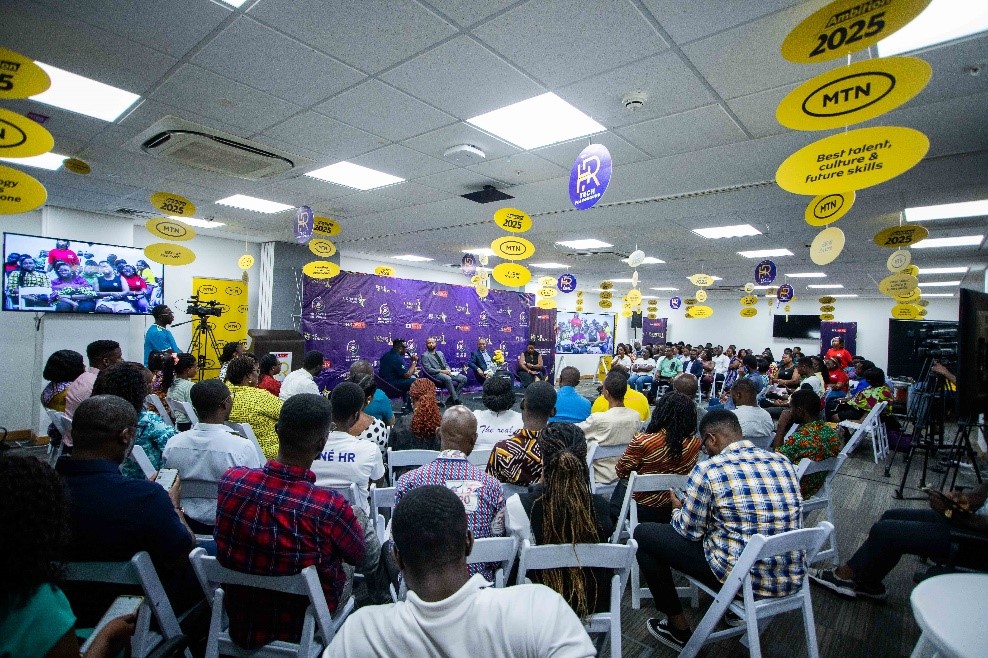
At the HR Tech Playground in Ghana recently, HumanManager in partnership with HR Focus and MTN Ghana, shared insights on the theme “Reinventing HR processes in the digital era”. The event provided a platform to discuss the revolutionary changes taking place in the HR landscape and the unprecedented opportunities that come with it.
Our conversation focused on the challenges faced in traditional HR processes, emphasising the need for a comprehensive digital solution that can adapt and scale with organisational needs. The spotlight was on our innovative HR Information System (HRIS) and payroll software, designed to address these challenges head-on.
HumanManager was highlighted for its ability to streamline administrative tasks, reduce errors, and free up HR professionals to focus on strategic initiatives. Additionally, it centralises all HR data, providing a sole source of truth and actionable insights. The software is also automatically updated to reflect the latest labour laws and regulations, ensuring compliance management.
Looking ahead, innovation now borders on the integration of Artificial Intelligence (AI) and machine learning to enhance predictive analytics for talent management, blockchain for ensuring data security and transparency, and mobile-first solutions to cater to the increasing workforce.
A commitment was made to stay ahead of the curve, and continuously improve HumanManager to meet the evolving needs of employees and employers alike.
At the event, we highlighted how HumanManager HR and Payroll software is setting the pace in digital HR through its comprehensive solution to the challenges faced using traditional HR processes. The engaging session received positive feedback and sparked meaningful discussions on the future of HR management systems.
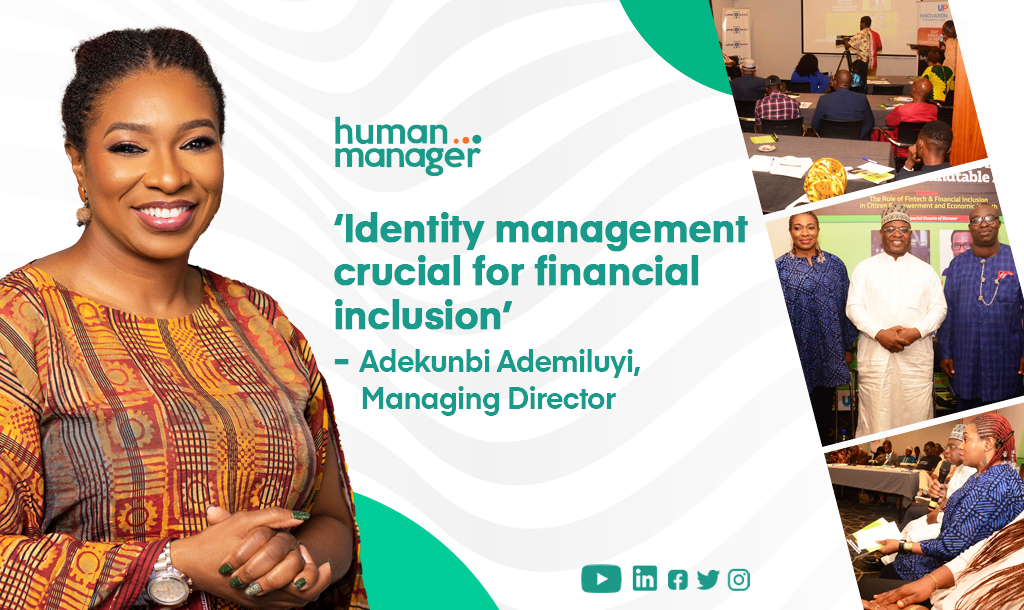
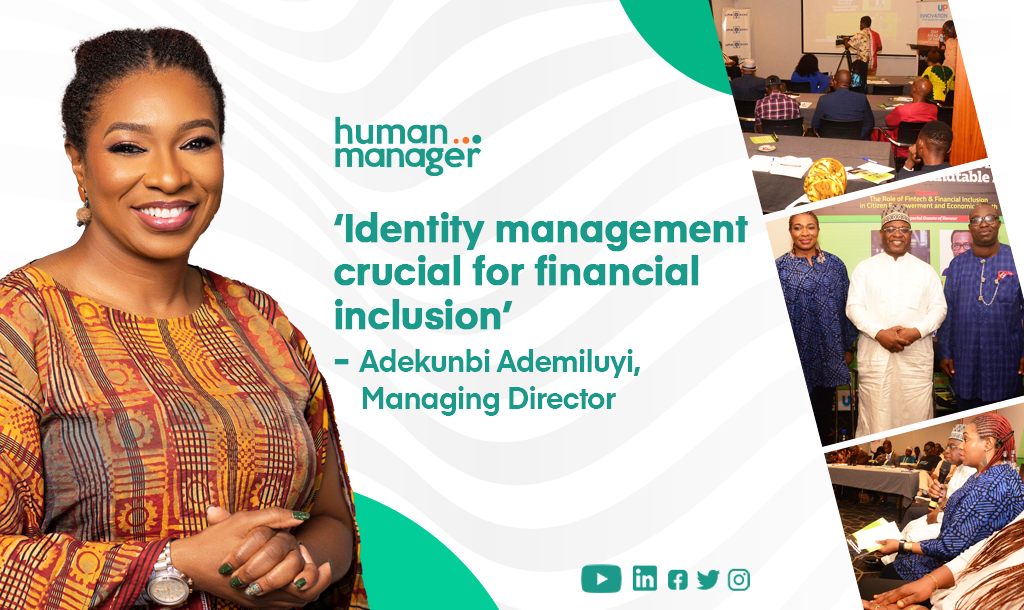
Adekunbi Ademiluyi, Managing Director of HumanManager Limited (HML), a leading provider of human resources management solutions in Africa, has stressed the need for a holistic Identity Management System (IMS) to achieve financial inclusion.
She said this as a Keynote Speaker at the inaugural Nigeria Fintech and Financial Inclusion Roundtable held recently in Lagos, Nigeria.
According to EFInA, a UK government-backed firm dedicated to deepening financial inclusion in Nigeria, the percentage of adult Nigerians with formal financial services – including bank accounts, insurance, and mobile money – rose to 64 percent in 2023 from 56 percent in 2020. However, only 52 percent of Nigerians have a bank account, as poverty continues to hinder a more comprehensive adoption.
Against this backdrop, the inaugural Nigeria Fintech and Financial Inclusion Roundtable was convened to explore innovative solutions and strategies for advancing financial inclusion as Nigeria is yet to achieve its 2024 goal of getting 95 percent of its population banked.
The event featured keynote speakers and panellists including our Managing Director, Adekunbi Ademiluyi; GMD and Chief Executive Officer, Unified Payment Services Limited, Dr Agada Apochi; Head of Group Communications, Security Exchange Commission, Mrs Joy Utubo; and Group Chairman, Nigerian Exchange, Alhaji (Dr) Umaru Kwairanga.
Ademiluyi underscored the significance of identity management in achieving financial inclusion while establishing HumanManager’s innovative Employee Information System (EIS) and financial services.
She said: “Financial inclusion begins with identity. Once an individual's identity is established, a financial account can be opened in their name. When people are integrated into an identity management system through fintech, their money can be securely circulated within the system, promoting greater financial access and inclusion.”
Adekunbi further emphasised the need for collaboration between banks and fintechs, saying it can unlock new opportunities, drive innovation, and ultimately deliver better financial service to customers.
"Initially, banks attempted to compete with fintechs, but they have since realised that collaboration is the way forward. By working together, fintechs can continue to reach out to individuals and facilitate account openings," she added.
She also described how HumanManager has played a major part in improving people welfare and their financial empowerment. "We offer freemium solutions on our app such that anyone can learn to improve their welfare.”
In his keynote address, Dr. Agada Apochi stated that financial inclusion is closely knitted with economic status and only those who are economically empowered can be financially included.
"We cannot sustain the impact of financial inclusion without prioritising economic inclusion. Beyond achieving individual or organisational economic growth, we can lift millions of Nigerians out of poverty by including them economically and financially" he said.
The inaugural Nigeria Fintech and Financial Inclusion Roundtable fostered a collaborative environment where industry experts and stakeholders engaged in constructive dialogue and explored innovative strategies to drive financial inclusion in Nigeria.
As the country continues its journey towards achieving comprehensive financial inclusion, the insights and recommendations gleaned from this event will undoubtedly catalyse positive change, ultimately empowering millions of Nigerians to access financial services and participate fully in the nation's economic growth.
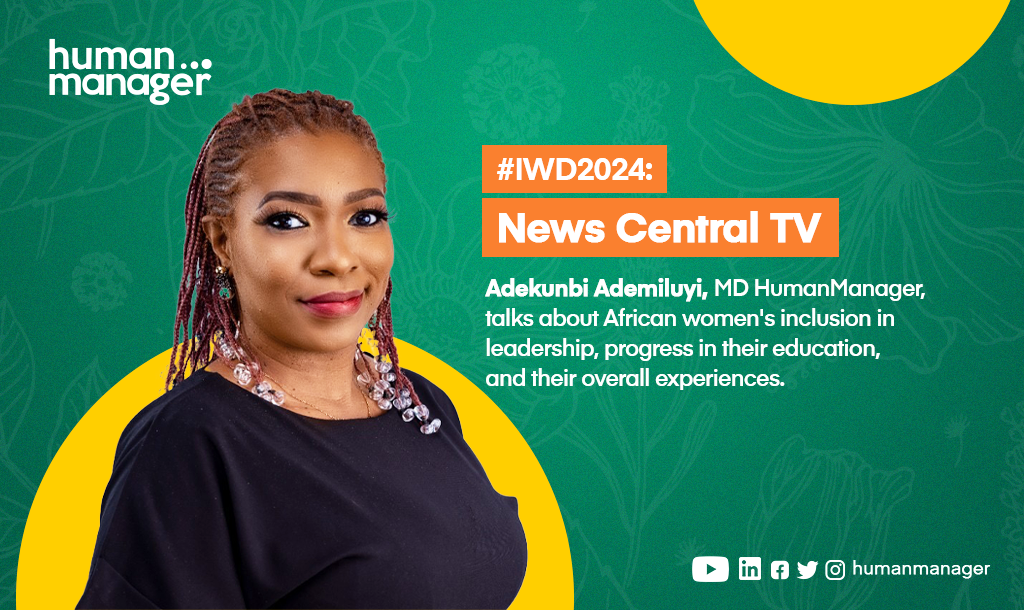
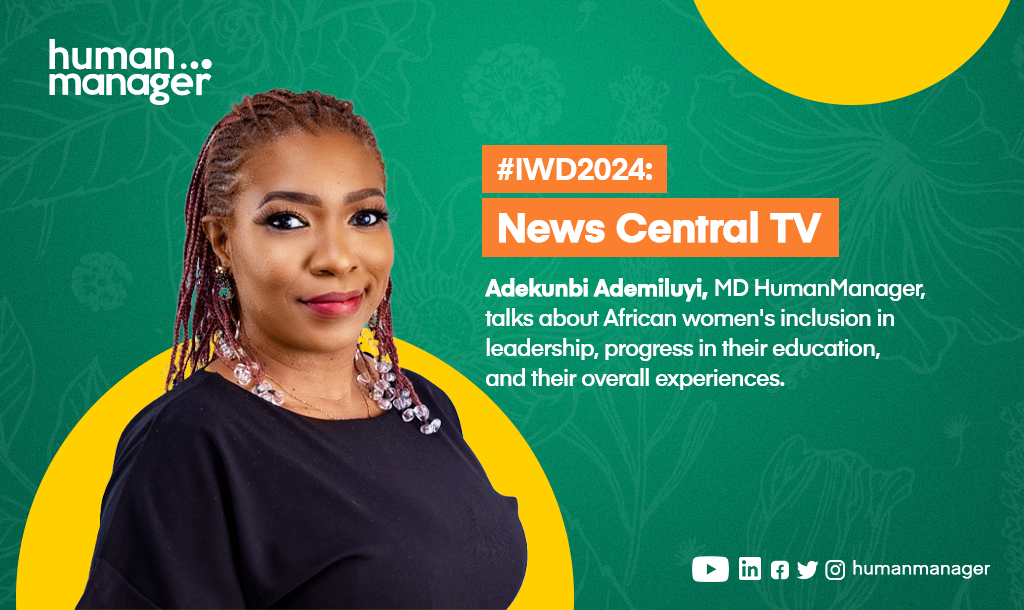
In a recent interview, our Managing Director, Adekunbi Ademiluyi, discussed the challenges faced by African women in leadership, education, and their overall experiences. Despite some progress, African women still encounter some obstacles hindering their growth.
Adekunbi emphasised the gender disparity in leadership roles across Africa, attributing it to cultural practices, gender stereotypes, and limited legal protection. To address this, efforts must focus on challenging these practices, promoting equality, and empowering women for leadership roles.
Education accessibility is a fundamental right, yet girls and women in Africa face obstacles due to insecurity, traditional beliefs, and limited resources, especially in regions like Northern Nigeria.
Overcoming these issues requires investing in educational infrastructure, providing scholarships, and challenging norms inhibiting girls' education. Equal education access empowers African women to contribute significantly to their communities and nations.
Furthermore, Adekunbi highlighted the gender pay gap, where women, including self-employed individuals, earn 34% less than men. Policies and legislation promoting equal pay are crucial in addressing this disparity. Awareness and education about the gender pay gap are also essential, along with fostering workplace cultures that value equality.
Adekunbi also addressed gender-based violence, stressing the need for regulation and inclusion of women in financial services. Central Banks in Africa have begun initiatives like agency banking to include more women. Expanding these efforts and creating safe environments can empower African women to overcome challenges.
Overall, concerted efforts are needed to empower African women. By challenging cultural norms, promoting equality, investing in education, addressing the pay gap, and combating gender-based violence, African women can reach their full potential. Collaboration between governments, organisations, and individuals is crucial to create an equitable society where African women thrive and contribute to development.
Adekunbi Ademiluyi is the first female Managing Director of HumanManager, and also an Executive Director of SystemSpecs Group. Her expertise spans over two decades in Financial and Information Technology, Banking, Human Resources Management and Data Management. Follow HumanManager on Linkedin, Instagram, Facebook and X
Performance appraisals have proven to be one of the best ways to improve employees’ productivity and enhance outcomes.
This periodic evaluation of staff performance provides feedback on their strengths and weaknesses, enhances subsequent output, helps identify and reward high-performing members of staff, and determines appropriate salary upgrades.
Despite its numerous benefits, a lot of mistakes — sometimes known as rater errors — from a supervisor’s biased viewpoint can result in low morale, anxiety, poor job satisfaction, or even loss of job. It is therefore pertinent that supervisors, managers, and human resources personnel understand these biases and how to eliminate them during appraisal exercises.
These few points present some of the pitfalls that must be avoided and how to overcome them:
1. Central Tendency or Grouping
In this instance appraiser rates staff in a not-too-good or not-too-bad category. This is unfair to employees who really deserve a higher grade.
In this light line managers should establish and agree on SMART Key Performance Index (KPI) at the beginning of the appraisal period and evaluate performance against these goals. Also, observable behaviour should be documented over the entire performance cycle through attachment of supporting document on HumanManager Management Software.
2. The Halo or Horns Effect
This occurs when the appraiser allows specific positive or negative factors related to the employee’s work affect the overall performance assessment.
Line managers should track, and document performance based on agreed KPIs daily, weekly, monthly, bi-annually, or annually. Identify specific behavioural attributes that support your ratings and be sure that none is influenced because it is particularly admirable or irritating.
3. Bias or Holding a Grudge
This is when the appraiser makes an employee suffer for past behaviour, irrespective of the positive output at work or when the appraiser judges the employee based on factors like state of origin, gender, religion, age, disability, weight, height, marital status, etc.
No fair rating can be gotten when subjective orientation is introduced. Line managers should ensure to focus on the employee’s work, not on personal matters, unless those personal matters affect the work of the employee. Check your perceptions for accuracy, fairness, balance, and consistency.
4. Recency
This occurs when an appraiser rates only recent performance, good or bad.
In order not to be focused on only the recent deliverables, line managers should keep track of performance and document observable behaviour over the entire performance cycle to get a balanced view. Ask others for their observations of the employee to see if they have different views.
5. The Sunflower Effect
This is when an appraiser rates employees high regardless of performance to make themselves look good or to be able to give more compensation.
The goal should not make any set of people feel good but improve and in turn give value, employees can justify ratings through tracked comments across set approval workflows for various levels.
6. Similarity Error
In many organisations, there are instances where employees share similarities with their managers. Some managers may even show a preference for these employees over those who exhibit different behaviors or ways of thinking.
It’s natural to feel more comfortable with individuals who resemble you, but you must be cautious as this inclination can impede the appraisal process. Maintain objectivity and incorporate diverse perspectives in the performance appraisal.
7. First Impression Error
This is the rater’s tendency to let their first impression of an employee’s performance carry too much weight in the evaluation of performance over an entire rating period.
Appraisals should support regular feedback, reports and trend analysis to help line managers and HR track employee’s rating over a period.
8. Compare and Contrast Error
This occurs when an evaluator compares the performance of two employees instead of assessing everyone’s performance based on absolute measurements. This approach can make an employee with a “good” rating appear mediocre when compared to someone rated as “excellent.”
Every employee possesses unique qualities, strengths, and weaknesses that make them distinct professionals. A fair appraisal cannot be achieved by attempting to compare one person’s abilities with another. Hence, managers should evaluate employees based on their individual performance against the standards and criteria that have been established for them.
9. Avoiding negative feedback
Many managers do not feel confident enough to have difficult conversations. But for growth to happen, there needs to be an honest discussion about the skill gaps your team members need to fill to be able to progress to the next stage of their career.
However, this doesn’t mean that negative feedback shouldn’t be handled with care. Prepare what you want to say in advance, rehearse it if needed or get some coaching to increase your confidence. Remember, good managers will set the bar high, but also provide the necessary support to reach objectives.
10. Concluding appraisals without feedback for improvement
This is when employees do not get comprehensive feedback after the appraisal exercise.
You can avoid this pitfall by using an automated appraisal system that allows for feedback. Always provide unbiased feedback about employees’ strengths and weaknesses, and even suggest helpful measures to boost outcomes.
Appraisal errors can cause your entire performance review programme to lose credibility among your employees. Consistent analysis of the process will help avoid this situation!
With HumanManager, you can enjoy a seamless and efficient performance management process that suits interactions within your organisation and among employees at all levels, as well as in the physical and virtual workspace.
We are excited to announce that HumanManager Limited, a member of the SystemSpecs Group, has successfully obtained ISO 22301 certification, reaffirming our commitment to business continuity and unwavering support to our valued customers.
This esteemed certification is a testament to our dedication to maintaining resilient operations while prioritising the trust and reliability that you deserve.
Our pursuit of ISO 22301 certification was driven not only by our desire to elevate our own operations but also by our unwavering dedication to providing you with exceptional service, regardless of the circumstances.
With this newly acquired certification, be assured that you can trust us, as we have the capability to maintain the smooth running of critical services even during emergency situations.
Following from a customer-centric perspective, here are clear-cut benefits for you:
Regulatory Compliance
Obtaining ISO 22301 certification demonstrates our commitment to adhering to internationally recognised standards. This ensures the highest level of business continuity planning, helping us meet stringent industry requirements and regulations.
2. Uninterrupted Service
ISO 22301 certification empowers us to manage unexpected disruptions efficiently and maximise recovery time. You can rely on us, knowing that we provide you seamless services irrespective of the challenges.
3. Service Continuity
You can be confident that we are well-prepared to maintain uninterrupted service delivery even in the face of unforeseen disruptions or emergencies.
4. Reduced Downtime
ISO 22301 helps us reduce downtime by proactively identifying and mitigating potential threats, ensuring minimal interruption in service delivery.
Achieving ISO 22301 certification is a significant milestone in our journey towards becoming a more resilient and customer-centric firm. It reaffirms our commitment to our customers and showcases our ability to navigate challenges effectively while ensuring unparalleled service quality and reliability.
Manual expense management is often a complex process in business, with loads of paperwork and spreadsheets that only result in lots of data entry, large investment of time, and careful maintenance of records — with no guarantee that the process will be error-free, no matter how meticulous it gets.
In order to stem these challenges, some organisations have come up with expense policies to streamline types of expenditure, their rates and/or even limits to which they can be incurred. They also have a process of getting funds in advance or reimbursed. But monitoring and enforcements of such policies remains a challenge.
A little purchase here and a staff travel and logistics cost there can quickly pile up your running cost. If you do not manage your spending and keep it at the barest minimum, it could result in a sizeable bill that you are not prepared for.
This is why as a manager, an admin or HR professional in any organisation, these proven tips will help to improve your expense management. Take a dive!
1. Do a Comprehensive Analysis
Carry out a thorough review of your organisation’s expense policy to define what types of expense will be reimbursed, how expenses should be submitted and how they will be reimbursed. Also, make sure to clearly inform and educate your employees to ensure that they act accordingly. But if you do not have an expense policy, create one today!
2. Have a Budget
Budgets help to set expense and revenue goals. When you know how much you can spend, you can more easily manage your spending. If your revenue is lower than budgeted, find ways to cut expenses and increase income. You can also establish metrics that are meaningful to your business and at par with standard companies in your industry.
3. Get Tough on Fixed Costs
Don’t be complacent about fixed costs because they are generally recurrent and often reflect long-standing relationships with suppliers. You should periodically review market costs to see if you can get better deals from competing suppliers.
4. Reimburse your Employees Promptly
Delayed reimbursements is a common problem. Ensure your staff turn in their requests in time and you act on it within the agreed time. This cultivates employee commitment and satisfaction. Also, let your employee know why an expense is not approved.
5. Cultivate Financial Discipline as a core Company Value
Financial literacy should be extended to your staff through decision-making and team-building, so they are better able to control their own costs. Also, you should actively involve your employees in the cost management process, and seek cost effective ways of operation.
6. Implement an Expense Management Solution
Having a software to ensure an automated reimbursement process gives you and other members of staff ample time to focus on other tasks, and remain motivated to perform better. Such solution will facilitate the submission or reporting of expenses by employees from any location for review and approval by managers from anywhere and at any time.
HumanManager can help your organisation manage its expenses, approval workflow, and required controls, as well as provide adequate reports and generate accounting journals based on your requirement.
HumanManager offers your employees the flexibility and ease to submit their receipts and get their managers’ approvals in real time. It is tested and trusted by hundreds of organisations to effectively manage their Claims and other HR needs including employee information, payroll, performance and leave.
Remember, that lovely quote by Benjamin Franklin: “a penny saved is a penny earned.”
The new year often exposes cracks in HR operations. Leave balances may not add up. Payroll rules can change overnight. Employee records can feel outdated as soon as you open them. For HR teams, January is less about resolutions and more about resetting systems, so the year runs more smoothly than the last.
A practical HR checklist helps teams shift from firefighting to forward planning. With the right technology, much of this work happens without manual effort or constant follow-ups.
Here’s what should be on every HR leader’s radar as the year begins:
As one of the most valuable ways to align people with business priorities, performance reviews help managers give meaningful feedback, recognize achievement, and set clear development goals for the new year. Tying these conversations to learning and career progression also strengthens retention and engagement.
2. Review and Update HR Policies for Compliance
New laws, remote work norms, and workplace expectations evolve fast. Reviewing your employee handbook, updated policies, and compliance requirements ensures your organization stays protected and employees understand expectations around pay, time off, conduct, and hybrid/remote arrangements.
Payroll errors are costly, and regulatory updates only increase the risk. Each year brings changes to tax rules, deductions, and statutory contributions. HR and finance teams need payroll systems that can adapt without disrupting operations.
For organizations operating in Nigeria, alignment with the New Tax Act (NTA 2025) is a critical focus. Beyond specific regulations, payroll systems should maintain accuracy across salaries, benefits, and deductions. HumanManager supports compliant and consistent payroll management, reducing errors and saving hours of reconciliation every month.
Leave policies are often carried over without question, even when the workforce has changed. Hybrid schedules, new roles, and compliance updates all affect how leave should work.
Start by auditing existing leave types, carryover rules, and approval workflows. Are employees clear on what they’re entitled to? Are managers approving leave consistently? Automation helps by removing guesswork and keeping leave balances accurate in real time. With HumanManager, leave planning becomes structured, transparent, and easy to manage without chasing spreadsheets.
Outdated employee data causes problems across HR, from benefits administration to performance tracking. The start of the year is the right time to review personal details, job roles, reporting lines, and employment status.
A centralized HR system allows teams to update staff records once and trust that information everywhere else. Clean data isn’t just about compliance. It’s the foundation for better decisions throughout the year.
6. Build Data that Drives Insight
Data shouldn’t sit unused. When structured properly, it reveals patterns in attendance, turnover, performance, and engagement. Modern HR platforms turn everyday activity into insights that leadership can actually use. With HumanManager, HR teams can track trends, spot risks early, and support workforce planning with real numbers instead of assumptions.
7. Equip Employees with Learning Pathways
Employee development is no longer optional. Skills evolve fast, and people expect growth opportunities that match their roles.
Learning pathways help employees understand what’s next and how to get there. Through HumanManager Learning, organizations can create clear learning pathways that connect performance, training, and career progression. Employees understand what’s next, and HR teams can support development without adding administrative burden.
A strong start sets the tone for the entire year. When HR processes are automated, data-driven, and people-focused, teams gain time to focus on what matters most: their workforce.
Start the new year with clarity, efficiency, and a competitive HR advantage, request a demo: https://humanmanager.net/demo-request or send an email to support@humanmanager.net
As the year draws to a close, HR teams everywhere face the same challenges: closing payroll, updating records, managing performance reviews, and keeping employees engaged. Without the right tools, these tasks become manual, repetitive, and prone to errors.
Here's a practical year-end HR checklist and how using HumanManager can make each step easier, faster, and more reliable.
1. Finalise Performance Reviews Without the Usual Bottlenecks
Without HumanManager: HR spends hours chasing managers and compiling spreadsheets. With HumanManager: Appraisal workflows are automated and centralised.
Checklist: • Collect all self-appraisals. • Ensure managers submit evaluations on time. • Compile performance results for leadership. • Identify top performers and training needs.
A structured digital process eliminates delays and errors.
2. Conduct a Year-End Engagement Survey Efficiently
Without HumanManager: Surveys get low response rates and scattered feedback.
With HumanManager: You can send alerts and track participation centrally.
Checklist: • Share a 5-10 question survey. • Review feedback on morale and leadership support. • Communicate insights to employees. • Set 2-3 improvement goals.
Consistent feedback builds a culture of listening.
3. Recognise Employees Using Accurate, Real-Time Data
Without HumanManager: Recognition depends on guesswork or inconsistent records.
With HumanManager: You get reliable data on attendance, performance, and tenure.
Checklist: • Review achievements and milestones. • Highlight major wins at year-end events. • Send personalised appreciation notes. • Prepare a "Year in Review" summary.
Data-driven recognition improves retention.
4. Review Employee Information with Confidence
Without HumanManager: Data corrections are slow and often incomplete.
With HumanManager: A centralised employee database ensures accuracy.
Checklist: • Update promotions, transfers, exits. • Confirm leave balances. • Validate employee documents. • Review access rights for security.
Without HumanManager: Payroll errors become more likely during year-end rush.
With HumanManager: Bulk updates and automated calculations reduce risk.
Checklist: • Review the new 2025 tax act (effective January 2026). • Process bonuses and salary reviews. • Update allowances and deductions. • Ensure statutory settings are compliant. • Reconcile payroll and generate reports. • Communicate compensation changes clearly.
Smooth payroll builds employee trust.
6. Support Wellness & Leave Planning Seamlessly
Without HumanManager: Tracking leave manually leads to inconsistencies.
With HumanManager: Leave requests and balances update automatically.
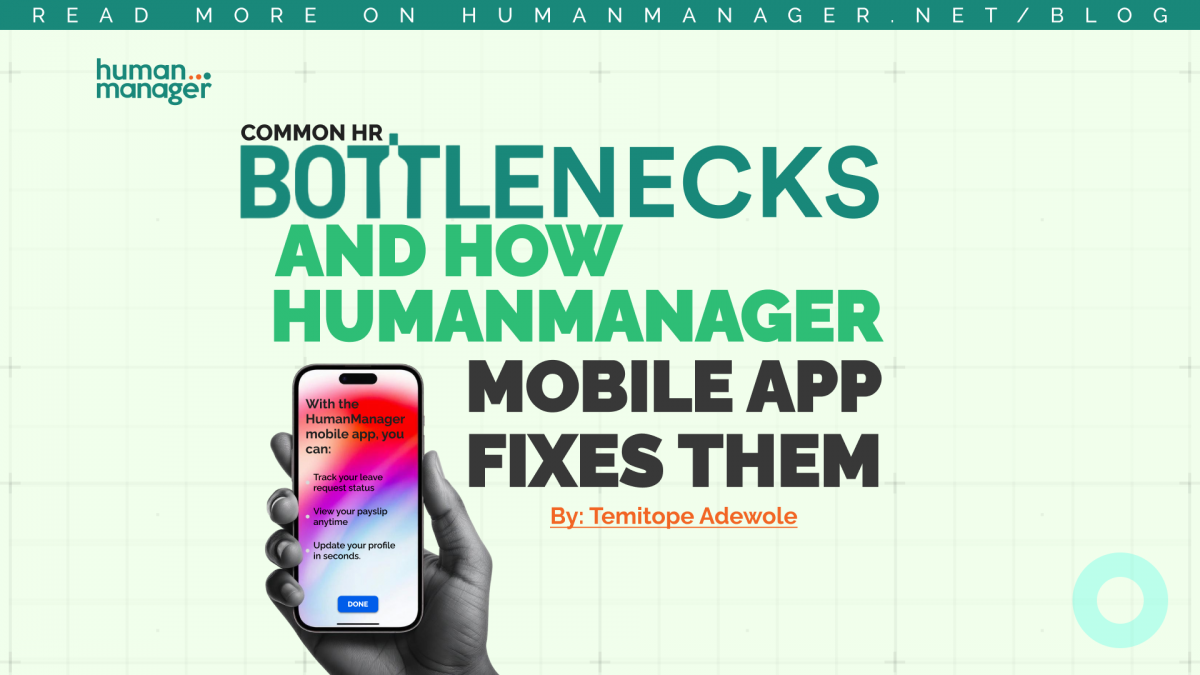
HR should be about empowering people and driving business growth, not getting stuck in endless administrative bottlenecks. Yet, too often, HR teams spend valuable hours chasing approvals, resolving payroll issues, or responding to routine staff requests. This results in slower operations, frustrated employees, and less time for strategic work.
The HumanManager Mobile App was designed to change this. By putting essential HR tools directly in the hands of employees and managers, it removes delays, minimises errors, and improves transparency across the organisation.
Here are five common HR bottlenecks and how our mobile app solves them.
1. Slow Leave Approvals
The Bottleneck: Paper forms, scattered emails, and forgotten requests often slow down decision-making and disrupt workforce planning.
The Solution: Employees can submit leave requests instantly — anytime, anywhere from the app. Managers receive push notifications and approve or decline on the spot. This feature speeds up decision-making and keeps schedules running smoothly.
2. Payroll Errors and Disputes
The Bottleneck: Manual payroll processes often leave room for errors. When employees lack visibility into their pay details, frustration builds, and HR teams get bogged down resolving endless complaints.
The Solution: The app gives employees instant access to their pay slips and salary history. Its seamless payroll integration reduces human error, while built-in transparency fosters trust. This results in a happier workforce.
3. Scattered Communication
The Bottleneck: Important HR updates, policy changes, and announcements often get buried in crowded inboxes. As a result, employees miss critical information, and organisations risk miscommunication or non-compliance.
The Solution: The app pushes notifications for employees to stay informed, aligned, and compliant.
The Bottleneck: Performance reviews often drag when appraisal forms pile up. The process becomes time-consuming and demotivating for both employees and managers.
The Solution: The app streamlines the entire appraisal process. Employees can complete self-assessments easily, while managers provide structured feedback directly. HR can monitor progress in real time, ensuring timely evaluations, stronger accountability, and a culture that truly celebrates performance and growth.
5. Overdependence on HR for Simple Tasks
The Bottleneck: Employees often rely heavily on HR for basic requests, from updating personal information to retrieving employment records. This constant back-and-forth creates queues, delays, and unnecessary workload for HR teams.
The Solution: With the app’s self-service features, employees can easily update personal details, view employment history, and download essential documents anytime, anywhere. HR teams spend less time on repetitive admin tasks, while employees enjoy greater control, speed, and convenience.
Final Thoughts
HR bottlenecks may seem minor, but over time they erode trust, slow down operations, and weaken productivity. The HumanManager Mobile App addresses the most common pain points from leave approvals and payroll visibility to communication, performance tracking, and self-service. This transforms everyday obstacles into opportunities for growth.
Ready to modernise your HR processes and deliver seamless employee experiences? The HumanManager Mobile App is more than a tool; it’s a reformative transformation.
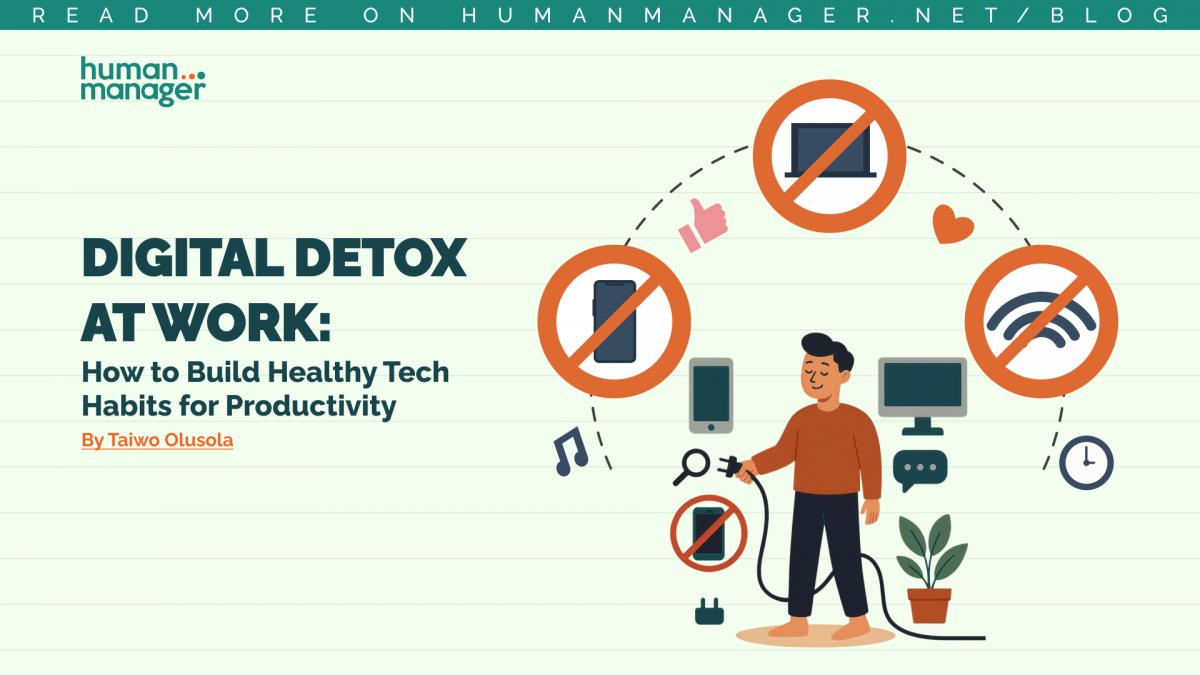
In a city that never sleeps, are employees truly resting?
For many professionals navigating the fast-paced, hyper-connected urban workplace, the drive to succeed often comes at a hidden cost. The rise of digital tools has made collaboration seamless and productivity higher, but it has also blurred the boundaries between office hours and personal time.
This “always-on” culture, while seemingly efficient, quietly erodes employee well-being, making true rest a rare luxury. That’s why a digital detox at work is no longer a buzzword; it’s a necessary strategy for healthier, more balanced workplaces.
Why Digital Detox Matters in Africa’s Workforce
This is not just a global phenomenon; it is a pressing reality across African cities, where the hustle often overshadows the need for mental respite. Without healthy tech habits, organisations risk a workforce teetering on the brink of burnout.
For years, employee well-being has focused on physical health and financial stability. While crucial, the digital age demands we expand this to include digital well-being. Constant connectivity means emails at midnight, Slack or Teams pings during dinner, messages on weekends – creates a double-edged sword that looks like dedication but leads to burnout.
The Cost of an Always-On Culture
A study on healthcare workers in Lagos Metropolis, Nigeria, highlighted a significant correlation between the lack of digital detox practices and increased burnout rates. This pattern is not unique to healthcare; it cuts across industries like finance, education, and tech. The fallout is real:
Reduced productivity and creativity
Higher error rates due to fatigue
Increased stress and disengagement
Weaker collaboration within teams
Imagine an employee drained from late-night emails making costly errors the next morning. Or a manager, glued to notifications, unable to engage meaningfully in a brainstorming session. These scenarios are daily realities in many fast-paced organisations.
Practical Strategies for Digital Detox at Work
Setting Clear Boundaries: Implement guidelines around after-hours communication. Unless it’s an emergency, employees shouldn’t feel pressured to respond outside office hours. Boundaries restore work-life balance and reduce stress.
Encouraging 'Unplugged' Breaks: Promote short, technology-free breaks during the day. Even 15 minutes of walking, meditation, or offline conversation can refresh the mind and improve focus.
Lead by Example: Leaders must model the behaviour they expect. Sending midnight emails signals to teams that they should always be “on.” Instead, consciously log off and encourage employees to do the same.
Use Technology to Support Well-being: Ironically, the right tech can help with digital detox. HR solutions like HumanManager streamline processes so employees don’t drown in multiple tools.
Leave Module: Makes requesting and approving time off seamless.
HumanManager Mobile App: Offers controlled, convenient access without overwhelming employees with unnecessary alerts.
The Future of HR: Beyond Productivity to Well-Being
Digital detox is a necessity for a sustainable and productive workforce. By building healthy tech habits and leveraging integrated HR solutions like HumanManager, organisations can empower employees to reclaim personal time, foster creativity and engagement, build resilience in the workplace, and nurture all-round human well-being in a digital world.
The future of HR isn’t just about payroll or compliance; it’s about protecting the human side of work in an always-on age.
For more insights and updates, join our growing LinkedIn community: The HR Growth Circle.
Are your finance and HR teams speaking the same language?
HR technology has evolved significantly, from spreadsheets to sophisticated integrated systems. Yet, many organisations struggle with siloed expense and payroll processes.
Think of a scenario where employees submit paper receipts into one system while payroll is managed separately in another. Also, imagine a sales executive after closing a major deal, only to spend weeks chasing their travel reimbursement.
When efficiency and cost control define organisational success, the disconnect between expense management and payroll often becomes a silent drain on resources, productivity, and employee morale.
For organisations with larger workforces, complex expense policies, and high transaction volumes, the problem multiplies. Hence, a unified system is not just a nice-to-have; it’s a necessity for operational efficiency and stronger employee experience.
Here’s why integrating expense management with payroll is a game-changer:
Enhanced Accuracy and Compliance: A unified system eliminates manual data entry errors, ensuring reimbursements are accurate and timely. It also reduces the risk of non-compliance with tax laws and internal policies, a critical safeguard in Nigeria’s evolving regulatory environment.
Streamlined Workflows and Time Savings: Employees can submit expenses on the go, approvals happen automatically, and reimbursements flow seamlessly into payroll. This saves hours for HR and finance teams, allowing them to focus on strategic initiatives like workforce planning and employee engagement instead of administrative backlogs.
Improved Employee Experience: When reimbursements are fast and accurate, employees feel valued and supported. This builds trust and reduces unnecessary financial stress, directly improving morale and loyalty.
Real-time Visibility and Data-Driven Decisions: Integrated systems give HR and finance leaders real-time insights into spending patterns. With this data, organisations can control costs, adjust policies, and make informed budgeting decisions, while reducing the risk of fraud.
HumanManager is more than payroll software. It’s a full HR management suite with built-in expense management. Once an expense is approved, it feeds directly into payroll for reimbursement. Employees can submit claims via the web or mobile app, attach receipts digitally, and track the status of reimbursements.
No more paper forms or endless follow-ups. For organisations, this means streamlined approvals, robust policy management, and detailed reporting—all in one secure platform.
In today’s workplace, retaining talent isn’t just about pay. It’s about creating an employee experience that respects their time, simplifies processes, and builds trust. A unified payroll and expense management system like HumanManager delivers exactly that—turning a historically frustrating process into a seamless, transparent, and efficient one.
At HumanManager, we don’t just build HR software; we build people.
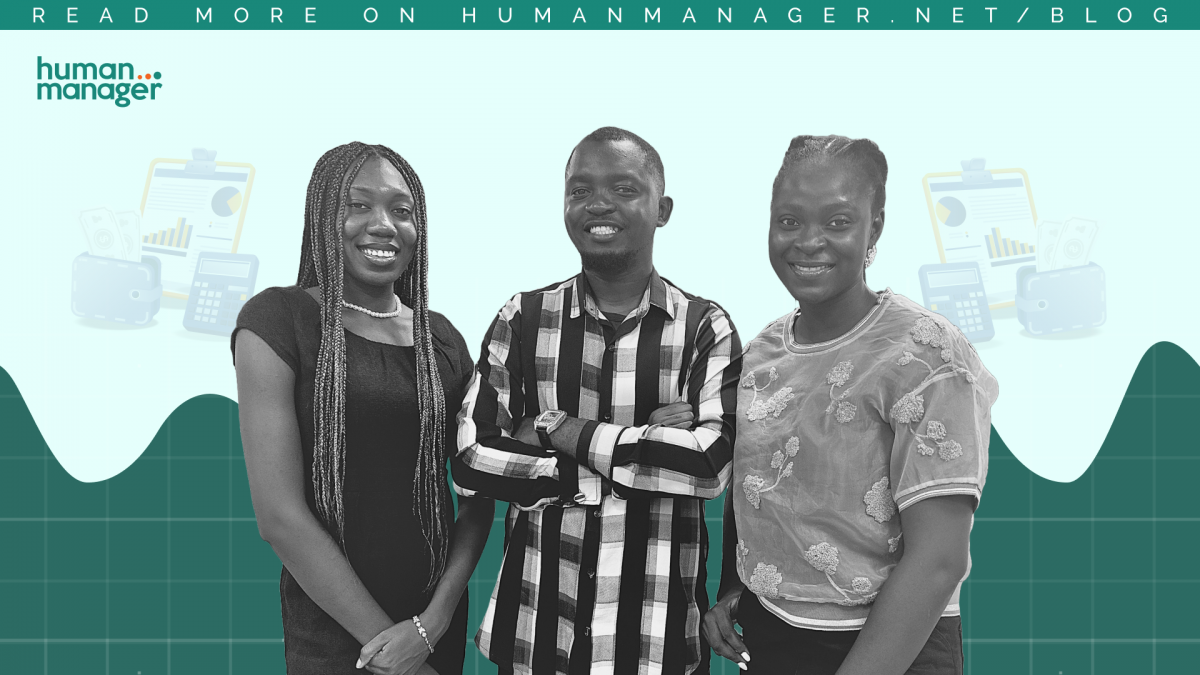
Rolling out HR and payroll solutions across Nigeria, Ghana, Benin, Ivory Coast, Liberia, Rwanda, and beyond has taught us one thing: “Perfect systems alone don’t drive success. Real success comes when systems are built around people.”
Payroll is beyond moving money from A to B. It’s the teacher in Monrovia who needs medication for her daughter, the accountant in Kigali planning his wedding, and the factory worker in Accra whose rent is due on Thursday.
Behind every payslip is a life depending on payroll to be accurate, timely, and secure. That’s why HumanManager combines over 3 decades of payroll expertise with multi-layered compliance checks to ensure salaries, pensions, and taxes are processed without error – because when payroll works, people thrive.
Read on to find out what more we discovered along the way.
We designed payroll with always-on reliability. Instead of depending on banks, we integrated wallet systems like Pouchii (by SystemSpecs Technology) and connected to trusted gateways such as like Remita and eTranzact.
This multi-channel setup means payments can be routed seamlessly through different banks, minimizing fees and ensuring business continuity. If a payment fails, HR generates payment status and it can be retried without missing a beat.
Results
With multiple payment channels in play, payroll to payment disruptions are almost non-existent. Clients who often lose 2–3 working days monthly to payment failures now enjoy 99% smooth, on-time payroll runs.
Lesson Learned
Backup payment options isn't a bonus, it's baseline. When one channel fails, another steps in seamlessly. That's the difference between a smooth payday and a workday full of complaints.
2. Automate Compliance or Drown in Paperwork
The Problem
For many SMEs and growing businesses, keeping up with West Africa’s fast-changing statutory regulations feels like a losing battle. Manual updates create room for errors, missed deadlines, and costly penalties. HR teams spend hours chasing employee records while outdated tax tables expose organisations to audit risks. In Nigeriaparticularly, the New Tax Act 2025 with its potential adjustments, staying compliant isn’t just hard work; it’s high stakes.
Our Fix
Dedicated Compliance Team: We have experts who stay on top of regulatory changes across all markets, so you don't have to. When changes happen, we update the system and notify our customers immediately.
Digital Onboarding: Our system ensures that you fill the basic mandatory fields before processing payroll for new employees.
Employee Self-Service Portal: Employees can update their personal data directly on the platform. This saves both the HR and employees’ time while keeping records up to date.
Localised Payroll Rules: Custom settings for each country ensure compliance with local tax laws, pension requirements, and other statutory deductions
Results
Our customers experience significantly fewer compliance-related penalties compared to when they managed employees manually. The self-service portal also eases administrative burdens, freeing up valuable time for teams to focus on more strategic tasks.
Lesson Learned
Compliance isn’t optional; it’s integral to operations. Relying on annual audits to uncover errors is too late. Real-time updates and employee-driven data are essential to keeping payroll accurate, compliant, and penalty-free.
. Holidays & Leave Rules Will Surprise You
The Problem
Holiday and leave rules across Africa are anything but straightforward. Dates often shift each year or move when they fall on weekends. Leave entitlements also differ by country: some mandate 15+ days annually, while others require as few as 6.
Failing to track these variations can lead to labour law violations, underpayment of staff, or miscalculated final settlements. The consequences? Penalties, payroll errors, and unhappy employees.
So, instead of hardcoding holidays as fixed annual events, we built flexibility into our system. This foresight paid off when the announcement came. Sure, there are standardized holiday dates, but we also provide the flexibility necessary for the more flexible work time outs.
Our Fix
Dynamic Holiday Calendars: HR can update holidays in real time. When Nigeria changed Democracy Day, our customers updated payroll calendars instantly.
Auto-Accrual Leave Policies: The system enforces country-specific auto-accrual leave policies, and therefore automatically blocks HR from approving leave that violates local labour laws.
Premium Pay Calculations: Payroll adjusts for premium holiday pay or unused leave payouts where required by law.
Results
Since adopting dynamic holiday management, clients have seen improved holiday-related payroll accuracy, with HR teams saving hours on leave requests and holiday calculations.
Lesson Learned
Hardcode nothing about holidays or leave. Official calendars can change overnight; hence, flexibility is non-negotiable. By treating holidays and leave as editable data, not fixed rules, you prevent costly errors.
4. Cloud Tech is the Real Deal
The Problem
Too many companies still run payroll on spreadsheets or clunky software locked in an office server that doesn't fly across borders. On-premises systems need local IT, manual updates, and guesswork when exchange rates shift. Add in unreliable internet, unstable power supply or limited support staff, and everything stalls. Business continuity fails when payroll depends on unstable infrastructure.
Our Fix
We built HumanManager as a secure cloud platform designed for speed, scale, and sanity:
Instant Updates: New tax tables and holiday changes roll out immediately. No waiting on IT departments or manual installations.
Multi-Currency Support: Seamlessly processes NGN, GHS, LRD, RWF, USD, and more while automatically updating exchange rates.
API Integration: Sync payroll with attendance and accounting systems, so data flows instead of manual files transfer.
Guided Onboarding: Every client gets a walkthrough with real examples from their specific country and industry.
Results
Cloud deployment fast tracks our clients' payroll processing time. System updates that once took IT departments days now happen instantly across client accounts.
Lesson Learned
Slow tech creates fast headaches. Cloud-based systems are safer, faster, and keep everyone on the same page. If you're still running payroll from a spreadsheet or outdated systems, you're vulnerable to infrastructure failure.
5. Local Expertise Beats Fancy Software
The Problem
A slick software means nothing if it ignores context. Many payroll solutions fail when expanding because they treat every market the same. What works in Lagos won't necessarily work in Accra or Kigali. In West Africa, explaining pay cycles businesses required plain language and building trust over time.
Our Fix
We went local:
In-country HR Partners: Hired local HR professionals who understand nuances and cultural differences. These aren't just customer support agents, but experts who get local business practices.
Localised Training: Used country-specific examples in training sessions. Nigerian clients learn PAYE calculations with actual Nigerian tax brackets and vis-à-vis for other countries.
Trust-Building Approach: Ran parallel pay runs for months to build confidence before clients switched systems completely. This parallel processing caught discrepancies early and demonstrated accuracy.
24/7 Local Support: Maintained local customer support teams who understand regional business hours, languages, and cultural context.
Results
Client onboarding was faster and support ticket volume decreased drastically. Most importantly, client retention improved year-on-year.
Lesson Learned
Payroll adoption in emerging markets is more about having the right support. As Akinjide Omojola, our Chief Innovation Officer, puts it: "You can't succeed by flying in with generic features and buzzwords. You succeed by listening, adapting, and respecting how people work."
Ready to Get Payroll Right?
At its core, payroll is the lifeline connecting businesses to their most valuable asset: people.
In emerging markets, where infrastructure shifts and rules change like sand, success depends on two things: building systems that adapt and remembering the human cost of failure.
The hardest lessons aren’t about fixing tech glitches or compliance gaps. They’re about earning trust – one accurate paycheck, one resolved issue, one local partnership at a time.
The best payroll systems don’t just calculate salaries. They anticipate problems, respect cultural nuances, and free people to focus on their work, not their wages. Because behind every transaction is someone counting on you to get it right.
See HumanManager in action.Book a demo or contact our sales team at sales@humanmanager.net to learn how we can simplify your payroll across emerging markets.
Today, success is not just about offering great products or exceptional services, but about how your team is efficiently managed. Hence, every business, regardless of size or industry, needs a dependable Employee Management System.
As a Business Development Executive at HumanManager, I have seen first-hand how implementing the right HR and payroll solution can transform workplace operations, but first, what is an Employee Management System?
An Employee Management System (EMS) is a digital platform or a solution designed to help businesses organise, track, and manage employee-related information and HR processes efficiently in one place.
It serves as a central hub for handling everything from onboarding to exit, ensuring smooth operations, compliance, and improved employee experience.
Here is why having an EMS is a necessity for businesses that want to thrive.
1. Centralised Employee Data
An EMS provides a single, secure platform to manage all employee information, including personal details, employment history, academic records, leave balances and more. This centralisation reduces paperwork, eliminates duplicate entries, and ensures that your HR data is always accurate and up to date.
2. Improved Payroll Accuracy
Payroll processing errors can lead to employee dissatisfaction and, in some cases, legal issues. With an Employee Management System like HumanManager, payroll is automated and can be integrated with attendance and leave data, ensuring accurate salary calculations, tax deductions, and statutory compliance. Thereby minimising disputes and building trust with your workforce.
3. Enhanced Compliance and Reporting
Keeping up with labour laws and regulations can be cumbersome. An EMS helps you stay compliant with basic standards by automatically tracking and generating reports on taxes, pensions, and more. When audits come around, you will have everything you need at your fingertips.
4. Efficiency in HR Processes
EMS streamlines HR workflows. Automations such as approval routes, appraisal reminders, and leave management free up time for your HR team to focus on strategic initiatives like employee engagement and retention.
5. Data-Driven Decision Making
One of the greatest advantages of an EMSis its ability to generate insightful analytics. You can monitor key metrics, basic employee data, performance trends, and departmental information on the go, helping you make informed decisions that support business growth.
6. Scalability for Business Growth
As your business expands, so does the complexity of managing your workforce. A robust EMS grows with you, allowing you to easily manage more employees in different locations and time zones, and adapt to organisational structures without breaking a sweat.
In conclusion, investing in an Employee Management System is not just about simplifying HR processes; it is about building a foundation for long-term business success. At HumanManager, we help businesses like yours unlock efficiency, accuracy, and strategic growth through innovations and automation.
Whether you are a small business or a large enterprise, the time to modernise your employee management is now. Let HumanManager be your partner in that journey.
Because we don’t just build HR software. We build people. Learn more about our services at www.humanmanager.net
Also, keep the momentum going and join our community – The HR Growth Circle 🔗Join here
In most countries where daily stress from overwhelming workloads to traffic-filled commutes can easily drain employee motivation and mental strength, mental health issues are insufficiently discussed in the workplace. The narrative is however shifting, and one important question now remains, are you supporting all employees adequately?
One truth stands out now: Productivity isn’t just about skill or speed anymore; but how well your people are. Yes, you read that right; it’s about the humans behind the work.
Workplaces are filled with people across organisational strata and varying roles. From junior staff to executives, these employees have diverse experiences and respond to emotional strain differently.
A mental health policy with a focus on top executives might have been sufficient in the past, however, the evolution in human resource management has shown otherwise. Such policies suggest that some employees’ struggles matter more than others, which is not the case.
A Philosopher once said: “Be kind, for everyone you meet is fighting a hard battle.”
How do you close this gap?
1. Listen more
Create a safe, judgment-free space where everyone can speak up, irrespective of their job grade or title, within the organisation. This engenders honesty and trust.
2. Leaders must be trained to recognize signs of burnout, anxiety, or disconnect, especially among teams or individuals who are usually not the focus in terms of business transactions or leadership engagement. These include support staff, office assistants, remote workers, and others. Mental health care training is not for HR executives only, but for all team leads.
3. According to an admonition of the Holy Bible, “Do not muzzle the ox while it is treading out the grain.” In simple terms, do not deny workers what they need while they work hard. Suffice to say that everyone within the organisation should have equal access to wellness tools like therapy, health insurance, gym access, or even just a listening ear and a good work environment.
4. Leadership must be about empathy. Real leaders are not afraid to show care. You need to build and encourage a culture of care among your people. This improves loyalty, teamwork, and general performance.
Mental health issues at work are not “feel-good” initiatives. It’s about respect, sustainability, and building workplaces where people want to show up and give their best. After all, the health of an organisation depends on the health of its people.
Because we don’t just build HR software. We build people. Learn more about our services at www.humanmanager.net
Also keep the momentum going and join our community – The HR Growth Circle