Categories
Managing Teams

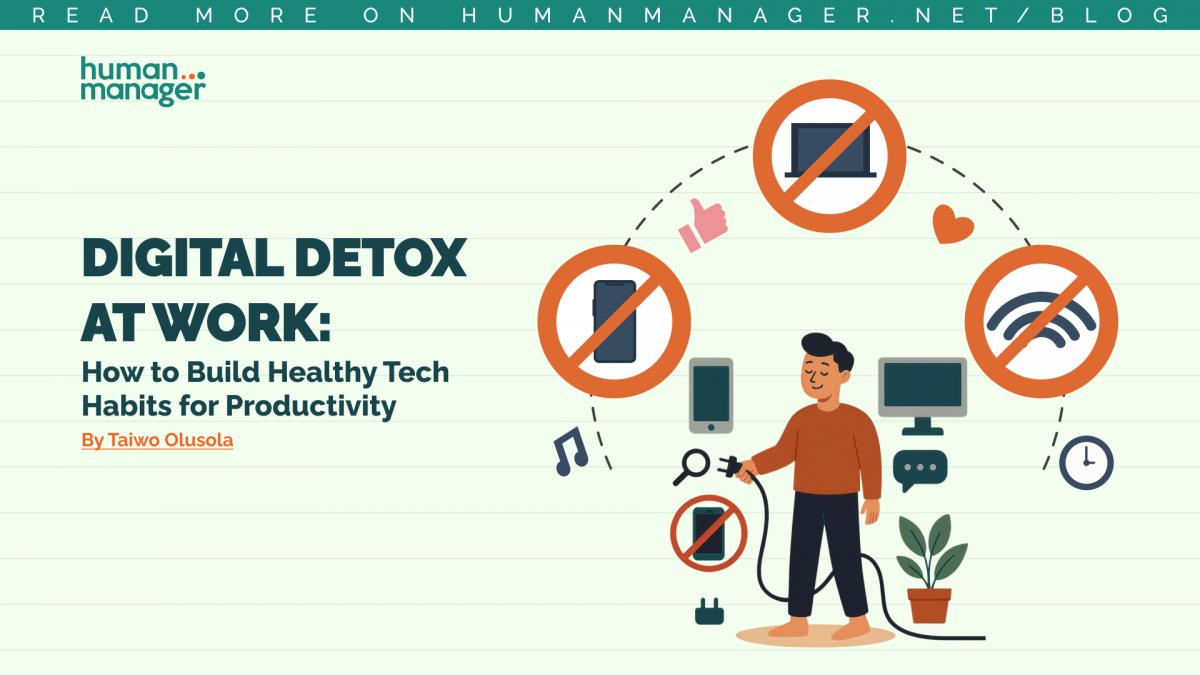
Digital Detox at Work: How to Build Healthy Tech Habits for Productivity 

By Taiwo Olusola 

In a city that never sleeps, are employees truly resting?  

For many professionals navigating the fast-paced, hyper-connected urban workplace, the drive to succeed often comes at a hidden cost. The rise of digital tools has made collaboration seamless and productivity higher, but it has also blurred the boundaries between office hours and personal time.  

This “always-on” culture, while seemingly efficient, quietly erodes employee well-being, making true rest a rare luxury. That’s why a digital detox at work is no longer a buzzword; it’s a necessary strategy for healthier, more balanced workplaces. 

Why Digital Detox Matters in Africa’s Workforce 

This is not just a global phenomenon; it is a pressing reality across African cities, where the hustle often overshadows the need for mental respite. Without healthy tech habits, organisations risk a workforce teetering on the brink of burnout.  

For years, employee well-being has focused on physical health and financial stability. While crucial, the digital age demands we expand this to include digital well-being. Constant connectivity means emails at midnight, Slack or Teams pings during dinner, messages on weekends – creates a double-edged sword that looks like dedication but leads to burnout. 

The Cost of an Always-On Culture 

A study on healthcare workers in Lagos Metropolis, Nigeria, highlighted a significant correlation between the lack of digital detox practices and increased burnout rates. This pattern is not unique to healthcare; it cuts across industries like finance, education, and tech. The fallout is real: 

  • Reduced productivity and creativity 
  • Higher error rates due to fatigue 
  • Increased stress and disengagement 
  • Weaker collaboration within teams 

Imagine an employee drained from late-night emails making costly errors the next morning. Or a manager, glued to notifications, unable to engage meaningfully in a brainstorming session. These scenarios are daily realities in many fast-paced organisations. 

Practical Strategies for Digital Detox at Work 

  1. Setting Clear Boundaries: Implement guidelines around after-hours communication. Unless it’s an emergency, employees shouldn’t feel pressured to respond outside office hours. Boundaries restore work-life balance and reduce stress. 
  1. Encouraging ‘Unplugged’ Breaks: Promote short, technology-free breaks during the day. Even 15 minutes of walking, meditation, or offline conversation can refresh the mind and improve focus. 
  1. Lead by Example: Leaders must model the behaviour they expect. Sending midnight emails signals to teams that they should always be “on.” Instead, consciously log off and encourage employees to do the same. 
  1. Use Technology to Support Well-being: Ironically, the right tech can help with digital detox. HR solutions like HumanManager streamline processes so employees don’t drown in multiple tools. 
  • Leave Module: Makes requesting and approving time off seamless. 
  • HumanManager Mobile App: Offers controlled, convenient access without overwhelming employees with unnecessary alerts. 

The Future of HR: Beyond Productivity to Well-Being 

Digital detox is a necessity for a sustainable and productive workforce. By building healthy tech habits and leveraging integrated HR solutions like HumanManager, organisations can empower employees to reclaim personal time, foster creativity and engagement, build resilience in the workplace, and nurture all-round human well-being in a digital world. 

The future of HR isn’t just about payroll or compliance; it’s about protecting the human side of work in an always-on age.

For more insights and updates, join our growing LinkedIn community: The HR Growth Circle. 

Categories
Managing Teams

Proven Model for Effective Feedback at Work

By Olakunle Yusuff 

Effective feedback in the workplace is essential in fostering growth and improvement. You may wonder: What does a well-structured model for effective feedback look like? It includes critical steps that guide the sender and receiver toward a constructive and actionable outcome, especially in a multi-generational workplace.

Here’s a model with key steps that make feedback effective and supportive: 

  1. Ask Permission 

Starting by asking permission to give feedback sets a respectful tone for the conversation. It allows the recipient to prepare mentally and foster a more open and receptive environment.  

An example could be, “Do you have a few minutes to discuss the recent project?” This approach not only conveys courtesy but also increases the likelihood that the recipient will engage positively with feedback. 

  1. Timing is Important 

Timing is crucial. Feedback is most effective when given soon after the observed behaviour or event, while details are fresh and relevant. Addressing the issue promptly shows that you value improvement and allows for more immediate corrective action if necessary.

  1. Focus on Facts When Describing a Situation  

Begin by describing the specific behaviour or situation objectively, without assigning blame or using accusatory language. Stick to the facts and avoid generalisations. For example, “In yesterday’s meeting, I noticed that the agenda was not followed completely, and we ran out of time for several key points.” This approach helps the recipient understand exactly what behaviour or outcome you are referring to. 

  1. Ask for Reflection 

Asking the recipient to reflect on their actions/outcomes encourages self-awareness and ownership of the situation. A simple, “How did the meeting go?” allows them to share their perspective, which can provide insight and foster a collaborative atmosphere for problem-solving. This can lead to greater buy-in when discussing ways to improve.

  1. Suggest Practical Steps for Positive Change 

Offer constructive suggestions rather than imposing solutions. For instance, “One way to stay on track could be to set a time limit for each agenda item.” Providing suggestions keeps the tone supportive and shows that you’re invested in their success. 

  1. Brainstorm Alternatives 

Involving the recipient in brainstorming alternative actions or strategies can make the feedback process more dynamic. Collaborate to explore solutions that align with the individual and organisation’s goals. This could be as simple as asking, “What other approaches could we try to keep future meetings on track?” 

7. Encourage Accountability & Ownership  

After discussing alternatives, confirm that the individual is committed to making the suggested changes. A straightforward question like, “Does this sound like a plan you can follow?” or “I am available anytime, just drop a message or a call” reinforces their accountability and builds a sense of ownership over the agreed actions

  1. Agree on Follow-Up 

To ensure progress, set a time to check in on the changes. “Let’s touch base in a week to see how things are going,” gives the individual a target to work towards and shows that you’re available for support as needed. 

By following this model, feedback becomes a constructive, respectful, and action-oriented process that promotes continuous improvement and strengthens relationships. 

Olakunle Yusuff is the Brand & Marketing Lead at HumanManager Limited. In this blog, he shares strategies for fostering open communication, building stronger teams, and driving workplace productivity through meaningful feedback.